Cybersecurity has become an important part of the digital world. From online banking and business applications to cloud platforms and personal devices, almost every digital activity depends on secure systems.
As organisations face increasingly complex cyber threats, the demand for people with cybersecurity knowledge and technical capabilities continues to grow.
For someone interested in entering this field, learning cybersecurity concepts is a good starting point. However, understanding a concept and knowing how to apply it in a real environment are two different things.
This is why practical cybersecurity training plays an important role in developing technical knowledge and problem-solving abilities.
Understanding Cybersecurity Beyond Theory
Cybersecurity is a broad field that involves identifying vulnerabilities, understanding attack techniques, analysing suspicious activities, protecting systems, and responding to potential threats.
Learning these concepts through books, videos, or classroom explanations can help build a foundation. But cybersecurity is a practical discipline.
For example:
- Understanding vulnerability assessment is different from identifying vulnerabilities in a system.
- Learning about penetration testing is different from performing a controlled security assessment.
- Studying malware analysis is different from examining suspicious files in a controlled environment.
- Understanding threat detection is different from analysing security events and identifying unusual activity.
Practical exposure helps learners understand how cybersecurity concepts work in real situations.
Why Hands-On Cybersecurity Training Matters
1. Learn by Working in Practical Environments
Hands-on labs allow learners to explore cybersecurity concepts through practical exercises. They can understand how systems work, examine vulnerabilities, practise security techniques, and learn from their observations.
This experience helps connect theoretical knowledge with technical application.
2. Understand How Vulnerabilities Are Identified
Vulnerability assessment and penetration testing are important areas of cybersecurity.
Learners need to understand how security weaknesses are identified, evaluated, documented, and addressed. Practical exercises can help them become familiar with the assessment process and the importance of responsible security testing.
3. Develop Analytical and Problem-Solving Skills
Cybersecurity professionals regularly work with unfamiliar situations. They need to investigate information, examine technical evidence, understand possible risks, and decide what actions may be appropriate.
Practical learning encourages learners to think beyond predefined answers and develop a structured approach to technical problems.
4. Explore Emerging Areas Like Artificial Intelligence
Artificial Intelligence is creating new possibilities in cybersecurity, including automated analysis, threat identification, and security workflows.
At the same time, AI introduces new security considerations and potential vulnerabilities.
Understanding the relationship between AI and cybersecurity can help learners explore emerging areas such as AI-driven OSINT, automated threat management, and AI-related security risks.
5. Gain Exposure Through Projects and Simulations
Live projects and real-world simulations provide opportunities to apply concepts in structured learning environments.
They help learners understand workflows, document findings, and approach technical challenges with greater confidence.
What Should You Look for in a Cybersecurity Training Programme?
Choosing a cybersecurity course is an important decision. Before enrolling, learners should evaluate whether the programme offers a balanced combination of technical concepts and practical exposure.
Here are some important factors to consider:
Structured curriculum: A well-organised curriculum should cover relevant cybersecurity domains and provide a clear learning progression.
Practical labs: Look for opportunities to practise concepts in controlled environments rather than relying entirely on theoretical sessions.
Live projects and simulations: Project-based learning can help learners understand how technical concepts are applied.
Experienced mentorship: Guidance from experienced trainers can help learners understand complex subjects and improve their approach to technical challenges.
Emerging technologies: Exposure to AI and evolving cybersecurity topics can help learners understand how the field is developing.
Career development support: Resume building, interview preparation, and soft skills sessions can support learners as they prepare for professional opportunities.
Explore Cyber Octet’s Advanced Diploma in Cyber Security with AI
Cyber Octet offers a one-year Advanced Diploma in Cyber Security with AI, designed for learners interested in developing cybersecurity knowledge and practical technical capabilities.
The programme covers more than 100 topics and combines structured learning with practical exposure.
Key learning areas include:
- Vulnerability Assessment
- System Penetration Testing
- Malware Analysis
- Threat Detection
- AI-Driven OSINT
- Automated Threat Management
- Emerging AI Vulnerabilities
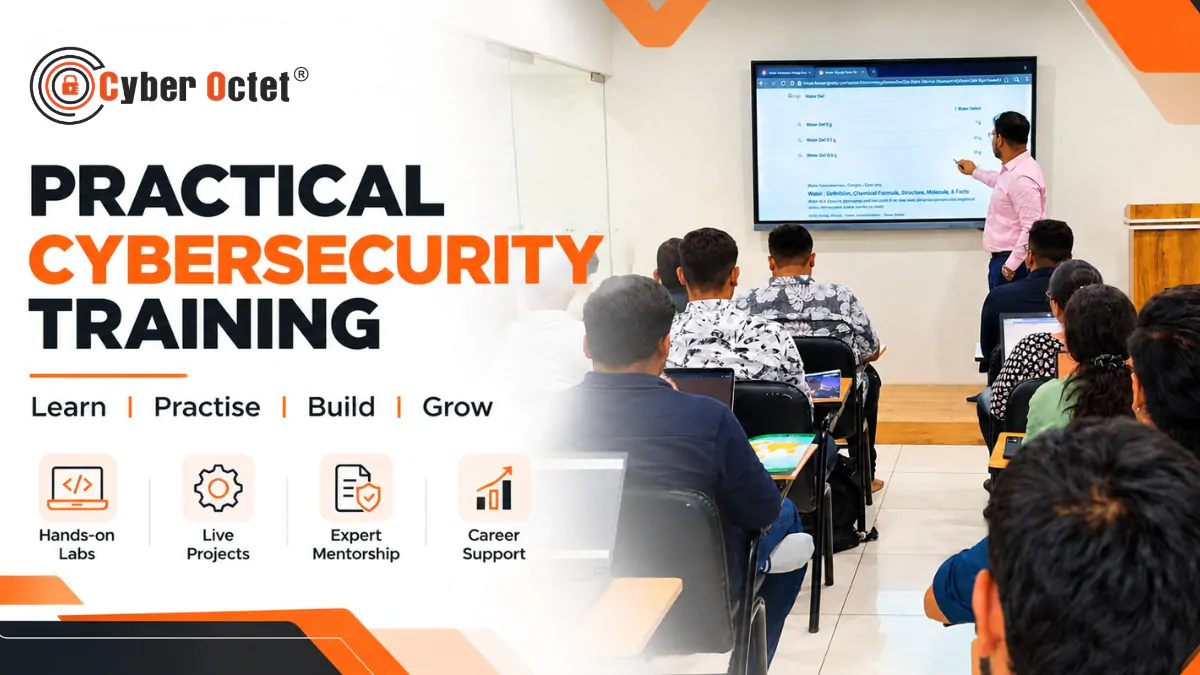
The programme includes hands-on labs, real-world simulations, live projects, and mentorship from experienced trainers.
Lectures are conducted three days a week, providing a structured learning schedule.
The programme is intended for students, working professionals, and business owners, including learners from IT and non-IT backgrounds.
Learning Is Only the Beginning
Cybersecurity is a continuously evolving field. New technologies, attack methods, and security challenges require professionals to keep learning and improving their knowledge.
A strong learning foundation, combined with practical exposure and continuous skill development, can help learners better understand the responsibilities involved in cybersecurity.
Rather than focusing only on completing a course, learners should focus on understanding concepts, practising techniques responsibly, asking questions, and developing the ability to solve technical problems.
Start Your Cybersecurity Learning Journey with Cyber Octet
Interested in exploring cybersecurity as a professional field?
Cyber Octet’s Advanced Diploma in Cyber Security with AI offers structured learning, practical labs, live projects, and guidance from experienced trainers.
The programme also includes soft skills sessions, resume building, interview preparation, and placement assistance.
Build your knowledge. Practise your skills. Explore the world of cybersecurity.Take the first step towards understanding cybersecurity through structured and practical learning.